How I Cracked Early Retirement Without Winning the Lottery
What if retiring early wasn’t about luck or a six-figure salary? I spent years chasing quick wins and falling for “get-rich-quick” traps—until I finally understood real investment skills. It’s not about timing the market; it’s about consistency, smart choices, and avoiding costly mistakes. This is how I built a life of financial freedom, step by painful step. No hype, just what actually worked. I didn’t inherit wealth, win the lottery, or land a Wall Street job. I started with a modest income, a growing family, and a quiet fear that I was falling behind. But over time, through trial, error, and relentless learning, I discovered a path that didn’t depend on miracles—just discipline, clarity, and the willingness to do what most people won’t. This is the real story behind my early retirement.
The Wake-Up Call: Realizing My Money Wasn’t Working for Me
For years, I believed the myth that saving alone was enough. I prided myself on clipping coupons, avoiding impulse buys, and stashing away a portion of each paycheck. I thought I was being responsible. But then I looked at my bank statements with fresh eyes and realized something unsettling: my money wasn’t growing—it was shrinking in real terms. Inflation was quietly eroding the value of my savings, turning every dollar I held into less over time. The account that felt safe was, in fact, losing ground. I wasn’t building wealth; I was just preserving the illusion of progress.
This was my wake-up call. I had been treating money like a static thing—something to hoard rather than deploy. I hadn’t considered that cash, while low-risk, is also low-reward, and in a rising-price environment, it can be a losing proposition. I also hadn’t accounted for the hidden costs: bank fees, low interest rates, and the opportunity cost of not investing. Every year I waited, I was missing out on potential gains that could have compounded over decades. I finally admitted to myself that I didn’t just need more discipline—I needed knowledge. I needed to learn how money works when it’s put to work.
At the same time, I was making emotional decisions without even realizing it. I’d avoid investing because I was afraid of losing money, but I didn’t see that I was already losing it through inaction. I’d occasionally dip into my savings for emergencies or unexpected expenses, resetting my progress. I had no buffer, no plan, and no clear goal. That’s when I began to shift my mindset: from saving to earning, from fear to strategy. I started asking better questions. What does it mean to make money work for me? How can I generate passive income? What kind of returns do I need to outpace inflation and actually grow my wealth? These weren’t just theoretical questions—they became the foundation of my new financial life.
One of the biggest myths I had to unlearn was that small expenses like daily coffee or occasional dining out were the root of my financial stagnation. While cutting back on unnecessary spending helped, I realized it wasn’t the solution to early retirement. Even if I eliminated every non-essential purchase, the savings wouldn’t be enough to retire decades ahead of schedule. The real leverage wasn’t in cutting costs—it was in increasing returns. That’s when I stopped focusing only on frugality and started focusing on growth. I began to see that financial freedom wasn’t about deprivation; it was about creating systems that generate income while I sleep. Passive income became my true target, not just a side dream.
Starting Small: Why Your First Investment Matters More Than You Think
I didn’t dive into the stock market with thousands of dollars or jump on the latest crypto trend. My first investment was small—so small that most people would have dismissed it as pointless. But I knew that the amount wasn’t the point. The real value was in the act itself: crossing the mental threshold from saver to investor. I started with a few hundred dollars in a low-cost index fund, chosen not for its potential to skyrocket, but for its simplicity and long-term reliability. I wanted something I could understand, something with a proven history, and something that didn’t require constant monitoring.
Before I made that first move, I spent weeks learning the basics. I read about asset allocation, risk tolerance, and the difference between stocks, bonds, and mutual funds. I didn’t try to master everything at once—just enough to make an informed decision. I assessed my own risk comfort honestly. I wasn’t willing to lose sleep over market swings, so I ruled out high-volatility assets early on. I also set a clear goal: not to get rich quickly, but to build the habit of investing consistently. That shift in perspective changed everything. I wasn’t playing to win big—I was playing to stay in the game.
One of the most valuable lessons from those early days was learning to read basic financial statements. I didn’t need to become a Wall Street analyst, but I wanted to understand what I was investing in. I learned how to look at a company’s earnings, revenue trends, and debt levels. I discovered that many funds publish regular reports that explain performance in plain language. This knowledge gave me confidence. I wasn’t guessing anymore—I was making decisions based on data. I also learned to recognize overconfidence. In the beginning, I felt a rush every time the market went up, as if I had made a brilliant move. But I quickly realized that short-term gains were often just noise. What mattered was the long-term trend, not daily fluctuations.
My first investment didn’t double overnight. It grew slowly, sometimes barely moving at all. But that was the point. It taught me patience. It taught me to separate emotion from action. And it taught me that starting small is not a compromise—it’s a strategy. By beginning with a manageable amount, I avoided the paralysis that comes from feeling like you need a large sum to begin. I proved to myself that I could do it. That small step led to another, and then another. The momentum built not from big wins, but from consistent action. And the habits I formed in those early months—regular contributions, periodic reviews, emotional detachment—became the backbone of my financial success.
Building a Foundation: Creating an Investment Strategy That Actually Fits Your Life
Once I had taken the first step, I knew I needed a plan. I didn’t want to react to every market headline or shift my strategy based on fear or greed. I wanted a system that could work whether the economy was booming or struggling. So I built an investment strategy that wasn’t based on copying financial gurus or chasing hot trends. Instead, I designed it around my real life: my timeline, my risk tolerance, and my income needs. This wasn’t about perfection—it was about sustainability.
I started by defining my time horizon. I was in my early 40s and wanted to retire by 55. That gave me about 15 years to grow my portfolio. Knowing this helped me balance growth and safety. I allocated a portion of my investments to equities for long-term appreciation, but I also included bonds and other lower-volatility assets to reduce risk. I didn’t try to time the market or predict economic cycles. Instead, I focused on diversification—spreading my money across different asset classes, industries, and geographies. This way, if one sector struggled, others could help offset the losses.
I also built in flexibility. Life changes—jobs, health, family needs—and I didn’t want my financial plan to be so rigid that it broke under pressure. I reviewed my portfolio quarterly, not to make dramatic changes, but to ensure it still aligned with my goals. If I received a bonus or tax refund, I didn’t splurge—I increased my investment contribution. If I faced a temporary income drop, I adjusted my budget but kept investing, even if at a reduced rate. This consistency was more important than the exact amount. I learned that small, steady contributions over time are far more powerful than occasional large ones.
Another key part of my strategy was automating my investments. I set up automatic transfers from my checking account to my brokerage and retirement accounts. This removed the temptation to skip a month or wait for a “better” time to invest. The money moved before I could talk myself out of it. I also used dollar-cost averaging—investing the same amount regularly, regardless of market conditions. This helped me avoid the mistake of buying high and selling low. Over time, this approach smoothed out volatility and kept me on track. My strategy wasn’t flashy, but it was effective. It didn’t require constant attention, and it didn’t depend on luck. It just required showing up, every month, with the same quiet discipline.
The Power of Compounding: How Time Became My Greatest Ally
If there’s one force that made early retirement possible, it’s compounding. I didn’t discover it early, but once I understood it, everything changed. Compounding is the process where your investment returns generate their own returns over time. It’s not magic—it’s math. But the results can feel miraculous when given enough time. I realized that the earlier I started, the more powerful compounding became. Even modest contributions, when reinvested consistently, could grow into something substantial.
I began to see my investments not as a series of separate transactions, but as a growing system. Each dividend payment, each capital gain, was automatically reinvested. Those small amounts bought more shares, which then generated their own returns. Over time, the growth wasn’t linear—it was exponential. The portfolio didn’t just grow; it accelerated. I remember looking at a projection chart and seeing how much larger the final value was if I started just five years earlier. That moment hit me hard. It wasn’t about earning more money—it was about starting sooner. Time, not talent, was the real advantage.
I also learned that consistency mattered more than size. Investing a smaller amount regularly was better than waiting to invest a large sum later. A friend of mine waited until his 50s to start, thinking he could catch up with bigger contributions. But even with higher income, he couldn’t match the growth I achieved simply because I had started earlier. The math was clear: time in the market beats timing the market. I didn’t need to pick winning stocks or predict economic turns. I just needed to stay invested and let compounding do its work.
One of the most powerful habits I developed was reinvesting all dividends and interest. I didn’t withdraw them for spending. I let them compound. Over the years, those reinvested earnings became a significant portion of my total returns. I also avoided withdrawing during market downturns. In fact, I sometimes increased contributions when prices were low, buying more shares at a discount. This discipline amplified the benefits of compounding. I wasn’t trying to beat the market—I was letting it work for me. And the longer I stayed, the more the snowball grew. By the time I reached my early 50s, the majority of my portfolio’s value came not from my original contributions, but from the returns on those contributions. That’s the power of compounding: it turns patience into profit.
Risk Control: The Unsexy Skill That Saved My Portfolio
Everyone wants to talk about returns, but few discuss how to survive the downturns. I learned this the hard way. In my early years, I panicked during a market correction and sold some holdings at a loss. It felt like protecting my money, but in reality, I locked in the loss and missed the recovery. That mistake cost me months of growth and taught me a crucial lesson: risk management is not optional. It’s the foundation of long-term success. The goal isn’t to avoid all losses—it’s to ensure that no single loss can derail your entire plan.
I developed a set of rules to protect my capital. First, I limited the size of any single investment. I didn’t go all-in on one stock, sector, or asset class. This position sizing ensured that even if one investment failed, it wouldn’t destroy my portfolio. Second, I embraced diversification beyond just stocks. I included bonds, real estate investment trusts, and international funds. This reduced my exposure to any one market. I also kept a portion of my portfolio in cash or cash equivalents, not for speculation, but for stability and opportunity. When markets dipped, I had dry powder to buy undervalued assets.
Another critical tool was the mental stop-loss. I didn’t set automatic sell orders, but I established personal rules for when to reevaluate an investment. If a company’s fundamentals deteriorated or my original reason for buying no longer applied, I sold. This helped me avoid holding onto losing positions out of hope. I also worked on emotional discipline. I stopped checking my portfolio daily. Instead, I reviewed it quarterly, focusing on long-term trends rather than short-term noise. This reduced anxiety and prevented impulsive decisions.
Perhaps the most underrated part of risk control was my emergency fund. I maintained six to nine months of living expenses in a high-yield savings account. This wasn’t part of my investment portfolio—it was a safety net. It meant that if I faced a job loss, medical issue, or major repair, I wouldn’t need to sell investments at a loss. This fund gave me peace of mind and financial resilience. It was boring, but revolutionary. It allowed me to stay invested through volatility, knowing I had liquidity outside the market. Risk control isn’t glamorous, but it’s what kept me in the game when others cashed out in fear.
Skills Over Shortcuts: Mastering the Habits That Separate Investors from Gamblers
There was a time when I watched financial news every morning, tracked stock prices hourly, and jumped on trending investments. I thought I was being proactive. In reality, I was reacting. I confused activity with progress. The turning point came when I realized that successful investing isn’t about speed or excitement—it’s about discipline and consistency. The real edge wasn’t in finding the next big thing; it was in mastering the habits that lead to sound decisions over time.
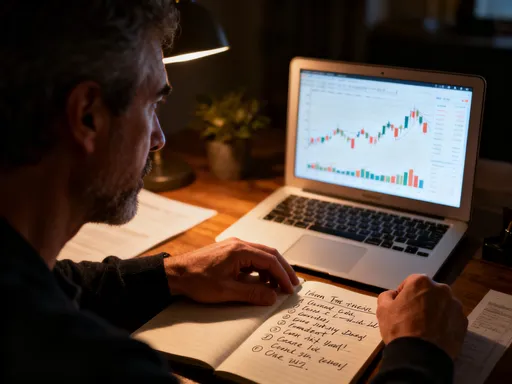
I started journaling my investment decisions. For every buy or sell, I wrote down my reasoning, the data I used, and my emotional state. Over time, I could look back and see patterns. I noticed that I tended to buy when I was optimistic and sell when I was afraid. I saw how media headlines influenced me more than fundamentals. This awareness helped me correct my behavior. I also began reviewing my portfolio performance annually, not to celebrate or panic, but to learn. I asked myself: What worked? What didn’t? What assumptions were wrong? This reflective practice improved my judgment and reduced mistakes.
I also learned to filter out noise. I unsubscribed from sensational financial newsletters and stopped watching trading shows. Instead, I followed a few trusted sources that focused on long-term trends, economic indicators, and company fundamentals. I read annual reports, listened to earnings calls, and studied industry trends. This deeper understanding gave me confidence to stick with my strategy even when the market wobbled. I stopped trying to predict the future and focused on what I could control: my behavior, my costs, and my consistency.
One of the most powerful habits was setting a regular investment schedule and sticking to it. Every month, without fail, I contributed to my accounts. I didn’t wait for the “perfect” moment. I didn’t try to time the market. I just showed up. This routine turned investing from a stressful event into a normal part of life. Over time, these small, repeated actions built a foundation of financial strength. I realized that discipline beats instinct every single time. The people who succeed in investing aren’t the ones with the best tips—they’re the ones with the best habits.
Living Financial Freedom: What Early Retirement Actually Feels Like
When I finally reached early retirement, it didn’t feel like a finish line. It felt like a shift. There were no yachts, no endless vacations, and no sudden lifestyle inflation. What I gained was far more valuable: time, peace, and the freedom to choose. I could say no to things that didn’t align with my values. I could spend more time with family, pursue hobbies, and contribute to my community. The constant background anxiety about money—would I have enough, could I afford this, what if something went wrong—finally faded.
But early retirement isn’t passive. I still manage my portfolio, review my strategy, and stay informed about economic trends. The difference is that I do it on my terms. I’m not dependent on a paycheck, so I can afford to be patient. I don’t panic during market dips because I have a plan and a safety net. I continue to live below my means, not out of fear, but out of principle. This ongoing maintenance is essential—wealth isn’t a one-time achievement; it’s a lifelong practice.
I also stay grounded. I don’t flaunt my success or pressure others to follow the same path. Everyone’s journey is different. What worked for me might need adjustments for someone else. But I do share my story to help others avoid the mistakes I made. I mentor younger colleagues, write about personal finance, and encourage open conversations about money. Financial literacy, especially for women and families, is something I care deeply about. I wish I had had more guidance when I started.
Early retirement isn’t the end of work—it’s the beginning of a different kind of life. It’s about aligning your money with your values, your time with your priorities, and your actions with your long-term vision. It’s not about escaping work; it’s about gaining control. And the most surprising part? The freedom I found wasn’t just financial. It was emotional, mental, and deeply personal. I didn’t need to win the lottery. I just needed to start, stay consistent, and never stop learning.